



Linda Taddonio: Competing With Amazon
The B2B e-commerce imperative.
 |
| The arrival of AmazonSupply.com isn’t the end; it’s only the beginning of an era where distributors must retool to capitalize on today’s customer expectations while spotlighting what they do best – nurturing sales engagements through personalized service and winning expertise. |
In the wake of the launch of AmazonSupply.com, wholesale distributors worldwide are scrambling to assess how they can address this new market disruption. While daunting, Amazon’s presence in the B2B e-commerce world is both a wake up call and a rally cry to B2B distributors to put their e-commerce house in order.
Read on to learn how you can successfully compete against the Internet behemoth, and even become stronger and solidify your position in the market as a result of embarking on e-commerce initiatives.
So, let’s address the Amazon in the room. The online powerhouse’s advantages and strengths are many — from being a proven B2C e-commerce expert, strong carry-over to B2B, having an established brand, and high levels of associated shopping/shipping experience and expectations. In addition, Amazon boasts low overhead and operations costs, and an expanding national network of warehouses to expedite order shipping at lower cost.
The threat is real. If smaller wholesalers and distributors do not have an active e-commerce strategy in place – or if e-commerce is not a critical piece of your current ongoing business growth – a portion of your core business is at risk if it’s in one of the 14 vertical markets being served by AmazonSupply.com.
Play to Your Strengths
Now that I’ve got your attention, and we’ve evaluated AmazonSupply.com’s strengths, it’s important to assess your own strengths. Wholesalers and distributors still have an edge over AmazonSupply.com through networks and established B2B customer relationships, product knowledge and expertise — plus a considerably wider product assortment offered within the vertical space – and both of these can be extremely advantageous.
Personal relationships among customers and suppliers have historically played a critical role within B2B business transactions. Customers will always pay more for value — which includes outstanding personalized customer service, the ability to negotiate terms and a hassle-free purchasing experience. For many B2B organizations, these personal touches carry significant weight in purchasing decisions.
The ability to offer flexible payment terms, as well as accommodate customer-specific shipping preferences and billing requirements, is also a boon to the non AmazonSupply.com house. Wholesalers and distributors often provide customers with shipping carrier options, consolidate orders to reduce costs, and invoice in preferred formats.
In addition, because less-than-truckload (LTL) shipments are foreign territory for Amazon.com, wholesalers and distributors are better versed in how to pass these savings along to their loyal customers.
Another significant advantage over AmazonSupply.com is a wholesale distributors’ deep and comprehensive knowledge of the products they offer – how they are used and how to troubleshoot them. In comparison, AmazonSupply.com lacks specific in depth expertise about the products on its online pages and instead specializes in transacting business online. Providing access to experts continues to instill confidence and meaning with customers as when faced with a question or issue, many prefer to deal with “real people.”
Over time, competencies here can be leveraged to increase orders as a result of personalized product recommendations, as well as access to a broader product assortment to address a wider range of specific customer needs.
Net-net, AmazonSupply.com will compete on price and availability for their product offerings, but the value you provide in personal relationships and resources can make up for it – especially if you can price match when it matters.
How to Compete and Where You Can Win
While the landscape has certainly shifted given AmazonSupply.com’s entrance into the market, you must make strategic moves now to ensure you can effectively compete online. Customers don’t expect small distributors to be the next Amazon.com, but they do have expectations for a feature-rich, dynamic and interactive B2B engagement. The following recommendations will fortify your position against AmazonSupply.com or any other competitors that emerge:
1. Evaluate your e-commerce strategy NOW. Identify how to get your e-commerce strategy up-to-speed, evaluate your current platform against that strategy and begin to address the emerging online business requirements of your customers.
2. Benchmark your online capabilities and look to improve usability and intuitiveness. Amazon.com is now the gold standard of e-commerce, so use it to benchmark your ongoing initiatives and to put together a road map to implement the features and functionality you may have been putting off. Realize your business processes may be impacted by these assessments.
3. Bring more/all of your SKUs online. Amazon focuses on big volume items, so this gives you the opportunity to earn the sale on those more specialized, slower moving products they are likely not offering.
4. Bolster online product content. Add to, review, and improve online content - rich content can set you apart from other online competitors and your customers expect it.
5. Use customer service as a differentiator. As you weave e-commerce into your business processes,you can begin to extend the online experience into the organization. For example, giving price matching authority to customer service reps, as well as offering no-hassle returns along with interactive customer service support via online chat and traditional channels, is differentiating.
Authorize your customer service and fulfillment team members to do what it takes to delight each customer, strengthen every engagement and go beyond expectations to ensure the current sale and future loyalty stays with your organization.
6. Create a social network. If you don’t have a social media presence, now is the time to get started. Connect with customers outside of the transactional buying process to gain insights on what they think about your products, how to improve them and what they’d like to see next.
7. Overhaul your fulfillment and shipping processes to improve speed and efficiency. Amazon has also upped expectations about speed of fulfillment. Audit your processes in your fulfillment and shipping processes to address any issues you flag along the way. You can gain speed-of-service and eliminate errors by integrating your e-commerce platform with your ERP and shipping systems.
8. Recognize the power of having a physical presence in the market. Some customers and situations will always warrant an in-person visit to a local, physical store. Promote these locations and the benefits of your “feet on the ground” personnel, same-day pickup and delivery whenever possible.
The arrival of AmazonSupply.com isn’t the end; it’s only the beginning of an era where distributors must retool to capitalize on today’s customer expectations while spotlighting what they do best – nurturing sales engagements through personalized service and winning expertise.
With 25 years of experience in industries focusing on manufacturing and distribution, Linda Taddonio brings a unique understanding of e-commerce initiatives, business process and ERP knowledge, as well as an extensive financial background to Insite Software. She is a CPA, has a B.A. in Music and a M.A. in Accounting from the University of Iowa. Reach her by phone at 866-746-0377 or visit Insite Software’s website at www.insitesoft.com.

CONTRACTOR SUPPLY MAGAZINE


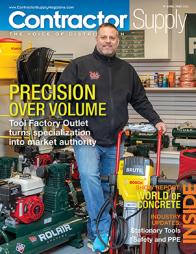
The April/May 2026 issue of Contractor Supply magazine is here!
In our cover story, Precision Over Volume, Tool Factory Outlet of Goshen, New York is a contractor supply operation built on niche brands and technical expertise.
Take a look back at World of Concrete 2026. Also in this issue are Industry Updates.
This digital edition, sponsored by BECK AMERICA Inc., is fully searchable and contains live links to every advertiser and new product listing. Click away!
| Read the Articles Read the Digital Edition |